Wednesday, February 26, 2020

Jenny Saville - The Grotesque and the Traditional

I have always found myself drawn to traditional art: finely tuned portraits of beautiful women free of imperfections. At the same time, however, I have also developed an affinity for the weird and the grotesque, especially in the context of female portrait art. I often feel that such grotesqueness is often lacking from past historical art periods. In my opinion, Jenny Saville's portraits, especially those highlighting the body, are a perfect combination of traditional techniques and more contemporary concepts.

Born in Cambridge, United Kingdom in 1970, Saville quickly gravitated towards painting. Her talents were noticed by her family at a young age, and her parents especially supported her passion for the arts. Her talent for painting along with encouragement from her art historian uncle led her to later attend the Glasgow School of art.

Jenny Saville’s “Propped,” first shown in 1992, set an auction high for a living female artist when it sold for 9.5 million pounds, or about $12.4 million, at Sotheby’s “Frieze Week” evening sale of contemporary art.Saville's work can be summed up as "both classical figuration and modern abstraction." Her depictions of the female nude figure, as shown below, are often mixtures of both traditional painting techniques and either grotesqueness or abstraction. Her time in university was specifically defined by her interest in imperfection, along with the ways in which appearance often coincides with societal taboo and what is said to be 'ugly'.

This piece in particular, entitled Propped by Saville is, to me, the combination of beauty and the grotesque. The way in which it's painted, including the strokes, the color scheme, and the way in which the figure sits reminds me of the traditional portraits I love. But, the oversized hands, the disproportional legs, and the writing in the background is characteristic of what contemporary art is: different, new, and now.

In addition to the piece itself being representative of contemporary art, the context in which it was sold characterizes the movement as well. The painting was sold at a Sotheby's auction in Fall 2018 for $12.4 million - a sum which should have made headlines. But, at the same auction was Banksy's self-destructing painting, which was valued at $1.4 million. The so-called "stunt" overpowered the media's coverage of the event, and especially, of Saville's success. The incident as a whole is incredibly ironic, considering that the piece itself is inherently feminist, and a male artist's comparably lower-valued work completely outshone that of a female artist.

I think this is just one example of how the traditional continues to thrive within the contemporary, in ways that are both positive and negative. This occurrence of art made by men overpowering art made by women seems to be a trend that has not necessarily become less prevalent as art has become more contemporary. Another contemporary example is Margaret Keane, whose art was taken credit for from a male companion.

While the survival of traditional aspects of art can be positive, such as the preservation of techniques like those employed by Saville, some traditional aspects can also be negative, such as the fact that female artists are often misrepresented in comparison to their male counterparts. In analyzing contemporary art, I feel that it is important for us to take a step back and take note of whether the survival of such traditional elements is helpful or hurtful.
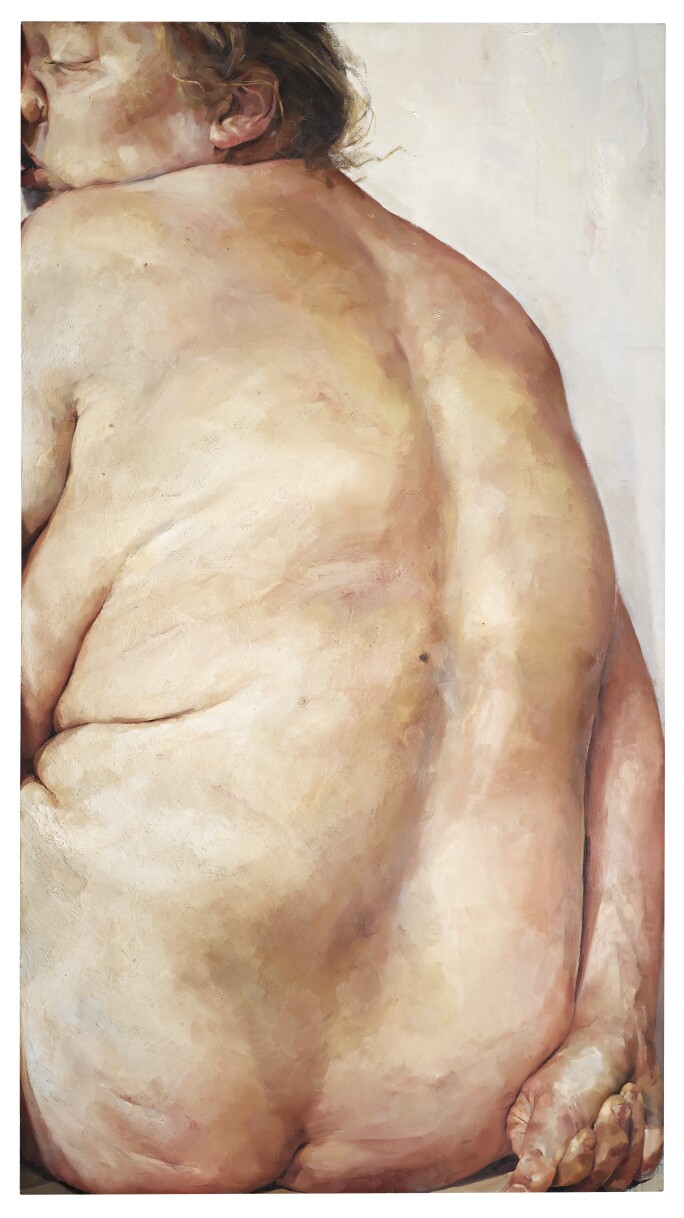
Image result for jenny savilleBranded (1992)Plan (1993)


Sources:
https://gagosian.com/artists/jenny-saville/
https://www.nytimes.com/2018/10/12/arts/-jenny-saville-banksy-sothebys.html
https://mymodernmet.com/what-is-contemporary-art-definition/
https://www.theartstory.org/artist/saville-jenny/

Nuances of Identity in Contemporary Art - Bree Collins

Identity is a funny thing. What factors one considers as contributing to their identity and the weight of each are unique to every individual, yet we all exist in the same world, subject to the same influences. In a society dominated by the proliferation of images and media, it is impossible to ignore the impact that others’ perception of ourselves has on an identity that is nothing but our own. These perceptions have only multiplied as technology has become more omnipresent, and as such the number of artists who actively use art to confront their resulting struggles with identity has skyrocketed.


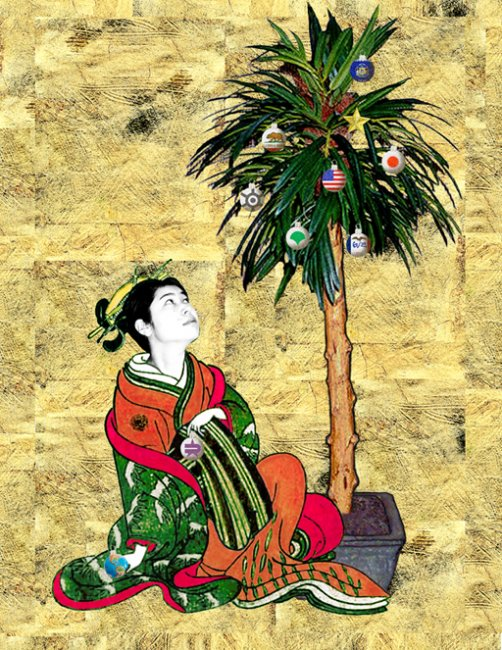
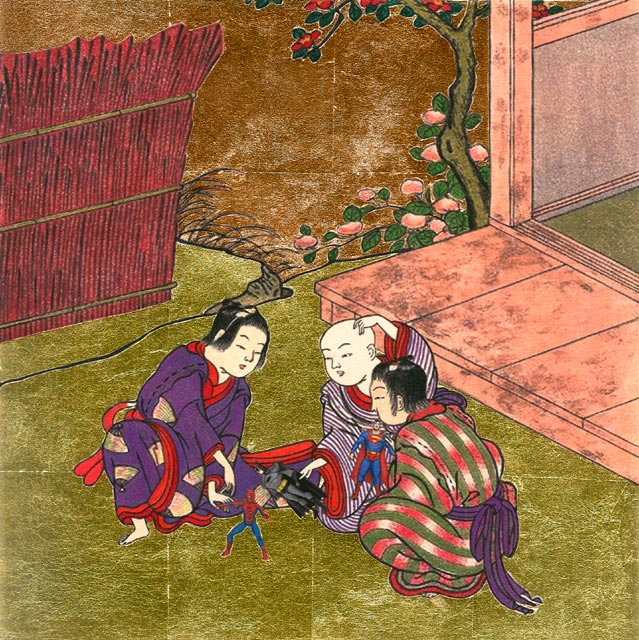
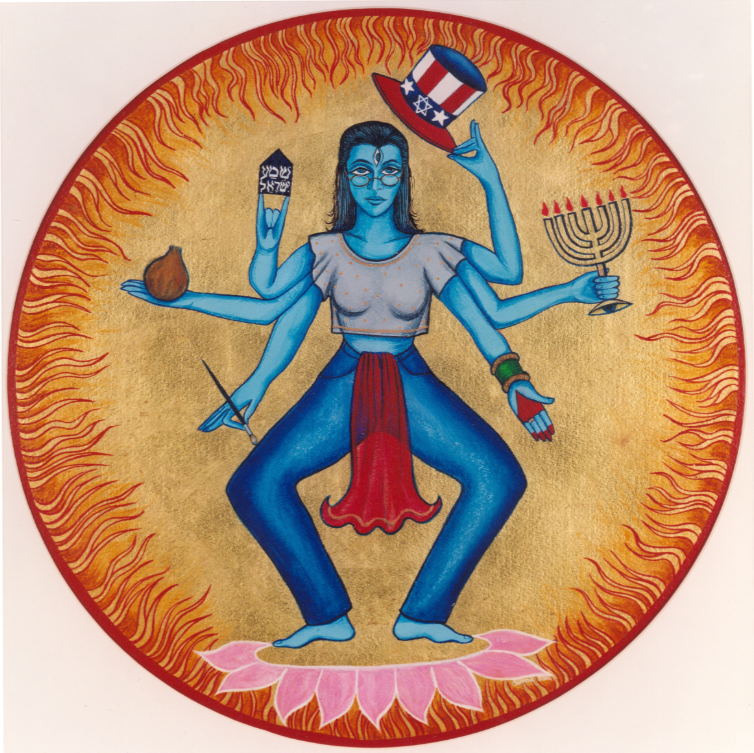
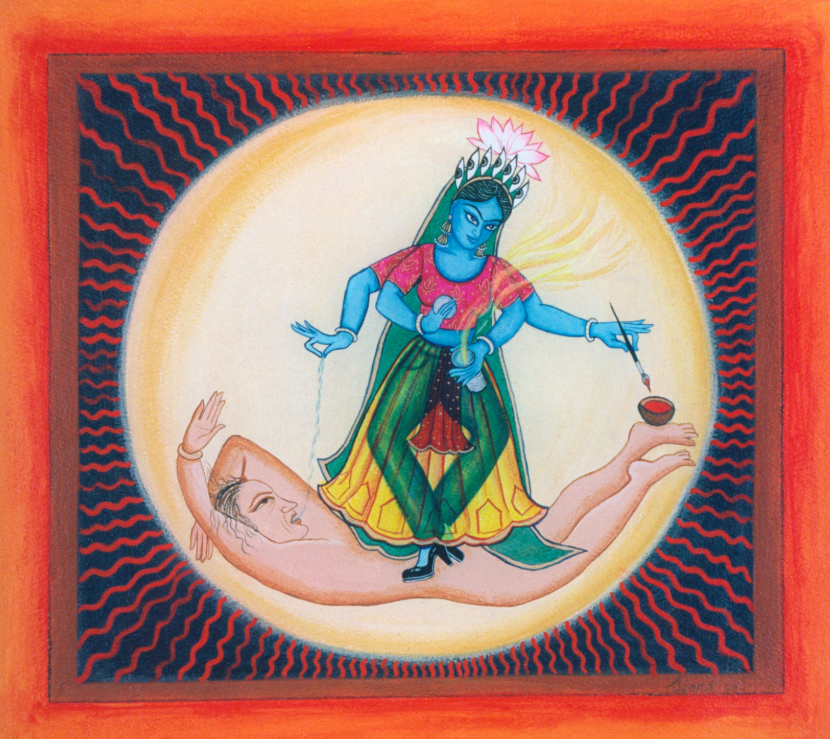
Some of my personal favorite artists who address the dissonance between their identities and those promoted by mainstream media are Fujiko Isomura and Siona Benjamin.


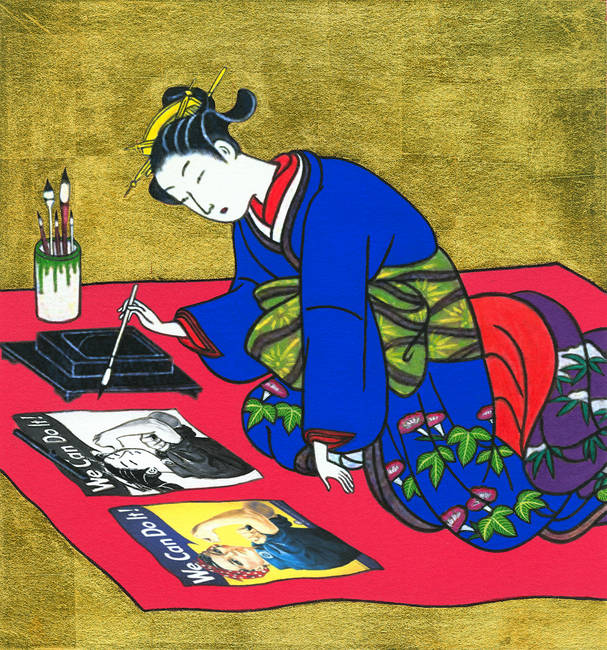
Fujiko Isomura was born and raised in Tokyo where she says "seeing [herself] as an individual unique woman was not necessary because blending in with others gains security within the society." Thus, it was a shock to move to America and be immersed in a society that, to an extent, praises individualism and personal development. Still, the American media has a tendency to overrepresent white figures and to withhold feminism from nonwhite groups. She is clever in the technique she uses to battle this phenomenon: to represent both her Japanese heritage and its norms along with her new American lifestyle and its norms, she combines the usage of computer-manipulated graphics and the application of gold leaf to imagery reminiscent of sixteenth century Japanese art.


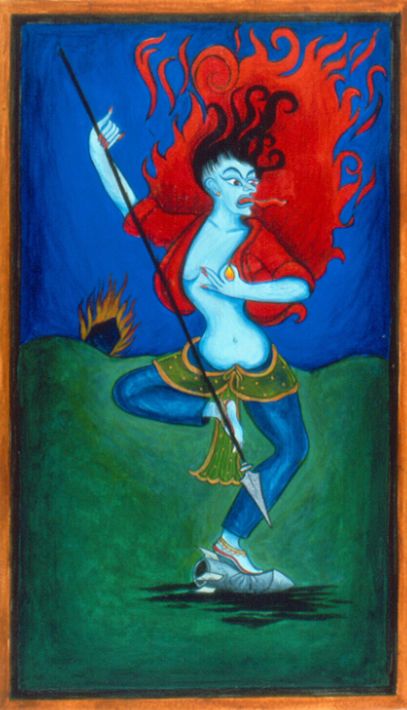
Siona Benjamin has an even more complex background: she grew up Jewish in Catholic Schools in Mumbai, a city shaped by Hinduism. The culture itself isn’t what Americans would consider respectful to women, and it was never appropriate to question why. Another immigrant, Benjamin found herself faced with a whole other history of social issues in the United States while carrying those she was raised around with her. Her approach is similar to Isomura’s: she maintains some traditional aspects of Indian art in her works, opting for miniatures. She also brings in classic Jewish symbolism and clashes it with Hindu symbolism. Her series “Finding Home” is an attempt to articulate the struggles she has had in searching for a total feeling of acceptance, and every decision she makes is intentional. A branch of this series focuses on a figure named Lilith. Lilith is a symbol of female empowerment as, biblically, she refused to submit to Adam and was punished accordingly. In Jewish legend, she is often viewed as a seductress, which adds another layer of allowance for feminine sexual expression. Lots of her figures have wings, a way to escape patriarchal pressure. All of her figures have blue skin, a reference to Krishna, an incarnation of Vishnu who embraces broad-mindedness and paradoxes; this decision also serves as a way to remove race from her figures.


Soltes, Ori Z. "Finding Home: The Transcultural Worlds of Siona Benjamin." Feminist Studies, vol. 38, no. 3, 2012, p. 689+. Gale Academic OneFile Select, https://link-gale-com.proxy.lib.duke.edu/apps/doc/A315068187/EAIM?u=duke_perkins&sid=EAIM&xid=3b73d32f. Accessed 25 Feb. 2020.

Contemporary Art - Kevin Boyd

Contemporary art refers to a large movement in the past 20 or so years that has drawn influence from almost every prior artistic movement. Because of recent globalization as well as drastic increases in technology, contemporary art is not nearly as formal or restrictive as movements in the past. Artists today are able to spread their art and messages internationally and receive feedback from anyone ranging from an esteemed art critic to a person scrolling through Facebook. Likewise, contemporary art is hard to define due to its immense diversity. In general, contemporary art tends to draw from major movements such as minimalism, surrealism, abstraction, photorealism, impressionism, and more. However, art historians are able to categorically define pieces from the past based on the time period and content into art movements, whereas contemporary art is defined by is an inability to be defined.

In today's constant politically charged atmosphere, a constant flow of information and communication between creators and others occurs which allows a dialogue to be created within contemporary art. One such example of a form of contemporary art is street art. Unlike traditional forms of visual arts, like painting or drawing, street art bases its message on the fact that oftentimes the act of creating street art is vandalism and illegal. One such artist, Banksy, whose roots began in street art, strives to imbue a message that creates a conversation about the socio-political climate of international and cultural relations. Contemporary art often involves performance or a spectacle to draw attention to the message being presented. His piece "Love is in the Bin" became international news when, during an auction, the piece began to shread as it sold. Banksy intended to spread the message that art should not be bought and sold and therefore dictated by a rich class of society. This message backfired due to the fact that the spectacle only increased the value of the piece. Nevertheless, contemporary art, once again, is not defined by its interaction with current events and responses from the general public, but rather the fact that its creation can be for any reason or purpose. Some pieces draw from minimalistic and abstract ideals to challenge the viewer's perception of the definition of art itself, while other creations rely on photorealism to document or create a dialogue about a person or place.

Because of the overlapping ideas and time period, contemporary art and modernism are often confused; however, modernism was replaced in the 20th century by contemporary art because modern art was deemed "not modern enough." Contemporary art strives to constantly change and not be categorically defined. Due to technological advancements, contemporary art often involves dynamic or diverse mediums. Some contemporary art centers around installation pieces which intrinsically leads to the spread of the creation on social media. Contemporary art has the ability to communicate important ideals with people all over the world or allow people all over the world to interpret the individual meaning for the piece. However, this is not a necessity for contemporary art. Contemporary art is distinctly undefinable which allows artists creative license to define their art however they wish to define it.

https://mymodernmet.com/what-is-contemporary-art-definition/
https://www.artspace.com/magazine/art_101/book_report/phaidon-twenty-first-century-painting-masterpieces-list-53386
https://en.wikipedia.org/wiki/Contemporary_art

Drawing vs. School

Life at Duke is beyond hectic, especially this semester. Even though this is my senior year spring, I feel like I just can't catch a break. Classes continuously pile homework and labs and exams until my days seem to blend together in one giant pile of school. I don't know if other people feel like this, I don't even know if other classes have this much work, but it's unbearable for me. I have little time for hobbies, little time for drawing, which is one of the reasons that I think got me into Duke.

I was being interviewed by colleges by alumni, and trying my best to differentiate myself from other students who also wanted to get into university. My art isn't anything special; I had started drawing "for real" in high school, and I only took a couple of art classes throughout those four years. But, it just so happened that one of my pieces was selected by my art teacher to hang in our local Starbucks. When my interviewer asked me what made me different from other applicants, I simply pointed to the art hanging on the wall.

When I received my acceptance letter, my interviewer called me, complimenting my abilities but also my art. Apparently he had especially emphasized my well-roundedness to the recruiter, but the only thing that he really remembered me by was my "partnership" with Starbucks.

I would like to assume that my art really boosted my chances of getting into Duke. But now that I'm here, outside of art classes I never have the time to draw. Every time I do try to sit down to work on art in my free time I become more stressed because all I can think about is my piles of school work. The only way for me to relax is to know that I'm doing art for a class, for homework.

On mark-making - Travis Nicks

Mark-making to build clever images is compelling. If you take a sec to look real close, a mark seems distracted and imprecise, but step back and the aggregate is emotionally impactful; more than the sum of the marks. Some contemporary artists are doing truly mesmerizing work by combining mark-making to form shapes and figures. I’ll talk about the work of mark-making contemporary artists Saeki, Korty, Fairs, and Yamamoto. They work respectively in light pencil, mixed drawing media, soft dark graphite, and even salt grains to assemble big pictures from small straight lines, deliberately curved lines, repetitive loose shapes, or recognizable patterns. In the new millennium, these four have taken the marks from mark-making from controversial abstract acts of expression to delicate, interesting parts of a thematically understandable and emotionally resonate whole.

Back to cave paintings, through stylistic cultural art, through the impressionists, to today, mark-making has been a universal act. (Dissanayake, 2015) Mark-making is natural. Put a crayon in a kid’s hands and textural marks appear. More traditional western art has tried to obscure markings to refine images. Shading, smoothing, blending, and texture flattening methods have worked to make images appear to have materialized with no mechanical actions showing the process of creation. The marks used by mark-making artists are larger and deliberately revealed as distinctive lines and shapes. Then they are assembled together to show a larger image with its own voice. Hiroe Saeki is probably the clearest of the four I’ll describe. In Saeki’s 2004 Butterfly Flower #27, she assembles a layered orchid-like flower from small inorganic circles and mildly organic wobbling lines to make the flower with ponytail-like curves fitted between thin, nearly straight lines to make the stem. (Saeki) Looking closely at the marks they are delicate. Drawn together the circles look like fancy Japanese “washi” paper. But together, the marks make a gentle little flower. Another Japanese artist, Motoi Yamamoto, take these delicate “washi” paper-like shapes in a different direction in style, scale, and medium. His salt crystal drawing installations cover basketball court-sized floors with salt, often as evenly spaced lines of pure white crystals. His 2005 piece Labyrinth was a 34 square-meter visually rigid drawing of one-inch salt lines looking like an uninviting white labyrinth as a circuit board. (Yamamoto, Labyrinth (2005)) An installation drawing from 2007 is a massive 105 square-meter drawing of wobbly intermingling lines looking more like a topographical map of the valley below a large salt mountain at the center of the piece. (Yamamoto, Labyrinth (2007)) These marks taken on their own are compelling, but taking the image as a whole is another experience entirely as the little marks assemble into a larger image. David Korty brings us back in scale to Saeki’s work but is more motion heavy that the static work of she and Yamamoto. An untitled Korty drawing from 2003 shows two kinds of mark-making in the piece. (Korty) The drawing is of something like a parking lot at a public park; ground, trees, fence, cars. The trees are made of broad, jagged markings drawn to look more like the geometric lines of stained-glass windows. The ground is a textural juxtaposition. Those lines are four to five parallel lines in short wrapping curves wobbling across the page or doubling over onto themselves without crossing. The result is a small landscape that comes across as comforting on the ground and jarring in the trees. All this emotion coming across from aggregated mark-making. Tom Fairs takes the motion of Korty and adds darkness and aggression to the marks. The resulting pieces are whimsical or at least never darker than your average Scooby Doo haunted mansion. Fairs tiny 2004 Untitled drawing is a 25 square-inch walking path with a gate and overhanging trees made up of scratchy, quick marks in the graphite tones of different hardnesses and pressures. (Fairs) The image has some motion and seems more inviting and chill than static or foreboding. It is exciting like a summer breeze is.

All of this emotionally resonant work is done with distinctive mark-making. A style where the whole is more than the sum of its smaller marks.
  
Korty 

Saeki
Fairs
Yamamoto


Bibliography

Dissanayake, E. (2015, July 20). What Ancient Marks Reveal About Modern Makers. Retrieved from American Craft Council: https://craftcouncil.org/magazine/article/what-ancient-marks-reveal-about-modern-makers

Fairs, T. (n.d.). Untitled (2004). https://bombmagazine.org/articles/tom-fairs. Bomb Magazine.

Korty, D. (n.d.). Untitled (Cars with Broken Fence), 2003. https://www.greenenaftaligallery.com/exhibitions/david-korty2. Greene Naftani Gallery.

Saeki, H. (n.d.). Untitled (Butterfly Flower #27). https://www.moma.org/collection/works/97246?artist_id=28785&locale=en&page=1&sov_referrer=artist. MoMA.

Yamamoto, M. (n.d.). Labyrinth (2005). Return to the sea. Gallery Sowaka, Kyoto, Japan.Yamamoto, M. (n.d.). Labyrinth (2007). Return to the sea. Sumter County Gallery of Art, Sumter, South Carolina, USA.

Tuesday, February 25, 2020

Emergence of Chinese Contemporary Art - Hillman Han


“What was the hottest investment in Chinese market in 2011?” “It was not stocks or apartments. It was art.”[1] The inclusion of contemporary art as an alternative investment strategy is appealing, especially in China where standard test schemes also support art students, leading to booming enthusiasm of learning art. However, contemporary art made its appearance long before this test reformation. To start this discussion, let us figure out what is contemporary art.

The word “contemporary” is always used in a relative position. Unlike the modern or post-modern art that is defined with a fixed time period with specific genres and styles, the scope of contemporary art can be either closer or wider from today’s time. It can refer to the connotation of the word “contemporary”, but what is so unique is the engagement of artist in a direct debate in the realm of art history.[2]

Prior to contemporary art in China, the late modern art in China serves Maoist idealism in form of combing direct imagery and propagandas, such as Big-character posters (dazibao); the notion of contemporary came to surface after the end of Cultural Revolution in 1978.
In the same year, the paramount leader of Republic of China Deng Xiaoping claimed to uphold “the free development of different styles and genres” and “free debate between different points of view and academic school.”[3] Released from political pressure, students and scholars voraciously consumed knowledge from the west and Japan, and began to explore new forms and theories in a global discussion. In comparison with Japanese term gendai bijutsu, China adopted the new term dangdai yishu (today’s art) to represent its contemporary art movement,[4] but the question remains: How shall Chinese contemporaries distinguish their work from the rest of the world, and how to interpret Chinese art within a global hierarchy.[5]

       One of the good examples of successful Chinese contemporary artists is Xu Bing. He received his art education in Central Academy of Fine Arts in 1977, the first college student after cultural revolution. His work featured printmaking and reconstructive way of manipulating languages that represent indigenous Chinese calligraphy.
A Book from Sky by Xu Bing
Ghosts Pounding the Wall by Xu Bing
Another famous contemporary artist is Ai Weiwei. He enrolled in the Beijing Film Academy in 1978 and studied animation. His played a variety of styles but languages he used carried his cultural experience and political intonations. Both artist’s work entered a discussion on the foundation of Chinese culture, history, and society, but went beyond the national boundary to target the root of humanity. Now, China is embracing more young artists and media. New art districts in Beijing and Shanghai will also support new blood in Chinese contemporary art.
Sunflower Seeds by Ai Weiwei


[1] “China Focus: China’s Art market Booms, but bubbles loom”, Xinhua English News, January 5, 2012
[2] Smith, Terry; “The State of Art History: Contemporary Art”, 2010
[3] Deng Xiaoping, "Zaí Zhongguo wenxue yishu gongzuozhe di sici daibiao dahuishangde zhuci," [Speech at the Fourth National Congress on Art and Literature] (October 1979), rep. Geremie R. Barmé, In the Red (New York: Columbia University Press, 2000), 20.
[4] Wang, Peggy; “Art Critics as Middlemen: Navigating State and Market in Contemporary Chinese Art, 1980s-1990s”; Art Journal, Vol. 72, No. 1, Spring 2013, 6-19
[5] Kong Chang'an, "Manhua yishu shichang he chuangzuo", On the Art Market and CreationJiangsu hue kan 3 (1991): 4