Monday, September 30, 2019

Pingyi Zhu - Contemporary Art


Contemporary Art

By definition, contemporary art is just any art or installation produced today, according to My Modern Met. But what exactly defines "today"? When we go to museums, we generally associate the contemporary art section with things like pop art, minimalism, street art, or anything that your art teachers don't really "teach" you in school. So there are many different styles of art that are considered contemporary art, but they all share certain characteristics. Below are three common themes in contemporary art and examples of each. Note that all of these examples could also have fit well under any of the three themes, showing that contemporary art is fluid.

According to the NYU Steinhardt School, contemporary art serves to:

1. Give artists the opportunity to reflect on contemporary societies and issues. 

In August 2018, the New York Times published an article on 12 contemporary artists' responses to climate change. Activism in response to climate change began in the 1990s and has grown into a worldwide movement. One artist, Mel Chin, created an app that depicts the future of Times Square underwater as a result of rising ocean levels and an aim to connect technology with pressing global issues. A photo of what that app is like is below: 


2. Show art that is being influenced by diverse cultures and technological advancements.

Every art period in history was transformed by technology that didn't exist previously. For contemporary art in the 21st century, these new technologies are computers or electrical contraptions that allow for the digitization of art. A 2014 Smithsonian article provides seven ways that technology has influenced contemporary art including lasers, art made by a wall-climbing robot, and stained glass windows made from paper cut by a laser cutter. 

standley-2

3. Bridges together different contexts and is distinguished by that lack of a general organizing principle. 

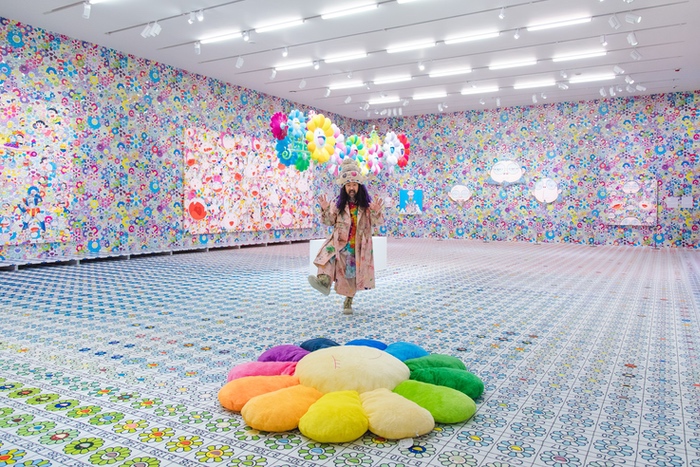
Yayoi Kusama is perhaps one of the most famous contemporary artists today. Although she is well-known for her installations, Kusama's artwork spans many different contexts and mediums. Having grown up in Japan through World War II, she moved to New York City after art school to escape familial pressures and conservatism around women in contemporary art. Kusama's art is wildly different from another well-known Japanese contemporary artist, Takashi Murakami. Below are images of installations by Yayoi Kusama and Takashi Murakami to illustrate the differences in art by Japanese contemporary artists, showing that contemporary art does bridge different contexts. 
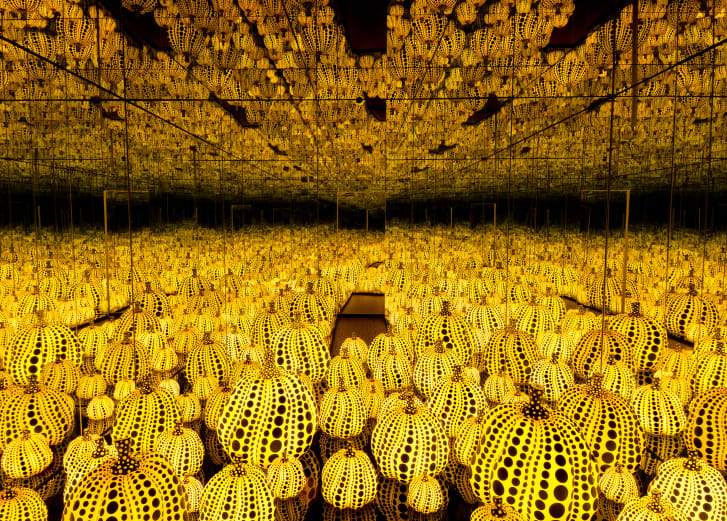
Dotted pumpkin sculptures have become one of Kusama's signature creations.
Installation by Yayoi Kusama

Image result for takashi murakami installation
Installation by Takashi Murakami

Outsider Art


         “Outsider Art” is a term that originated in the 1970s, with an impact on contemporary art that has intensified over time. This term has changed definitions throughout the past, expanding to cover a larger and larger range of artwork, beginning with pieces created by psychiatric patients. It originated with several doctors who, upon seeing the dozens of unexpected art pieces created by their psychiatric patients, collected the works and published them. This exposure of unanticipated art created in isolated circumstances inspired a French artist in 1948, Jean Dubuffet, who dubbed this type of art “art brut”. Translated into English, “raw art” means artwork that had not been influenced by art society or mainstream culture--art in its raw form. Shown is a piece by Madge Gill, an artist who contributed to the early ‘art brut’ movement.
           
         The amount of Outsider Art produced has increased in volume as more and more people decide to pick up art as a hobby, disregarding a lack of formal art education and the conventional guidelines of fine art. Public opinion has changed to encourage those with any interest in art to pursue it. A quick trip to the nearby art store or a googling of art techniques is convenient enough to pique the interests of people who did not originally consider themselves artists. The lines between “outsider” and “insider” art begin to blur, as the Outsider Art Fairs in New York and Paris grow in popularity, and other galleries offer spaces to “outsider” artists. With an open mind and the resources now available, the art world has become more hospitable to those without a formal art education or without a desire to follow convention, because of their desire to still create art nonetheless.

“Outsider Art” was coined by art critic Roger Cardinal in 1972, as a direct English translation of “art brut”. However, this definition quickly spun out from its original context. Today, Outsider Art includes any work by artists who do not have a formal art education, or do not take part in the established art world. This includes self-taught artists, hobbyists, and folk artists. One of these “outsider” artists is Henry Darger, who worked as a hospital janitor during the day, and in his free time, created a massive 15,145 page long epic novel called In the Realms of the Unreal, which was only discovered after his death. 

Sources:

Grimes, Shaunta. “On the Inside Looking Out: The Fascinating World of Outsider Art.” Medium
Medium, 31 Jan. 2019, 
medium.com/@shauntagrimes/on-the-inside-looking-out-the-fascinating-world-of-outside
r-art-789d36ff5bae.

Sherwin, Skye. “Madge Gill's Untitled Work: a Kaleidoscopic Inner World.” The Guardian
Guardian News and Media Limited, 9 Aug. 2019, 
www.theguardian.com/artanddesign/2019/aug/09/madge-gills-untitled-work-a-kaleidosco
pic-inner-world.

Smith, Brendan L., et al. “The Insider's Guide to Outsider Art.” Hyperallergic, Hyperallergic 
Media Inc., 4 May 2018, hyperallergic.com/440904/the-insiders-guide-to-outsider-art/.

“What Is Outsider Art?” Raw Vision Magazine, rawvision.com/about/what-is-outsider-art.

Contemporary Art and Social Commentary (Julia Henegar)

With the progression of time, art has expanded in every aspect. Contemporary art is the result of a continuous growth of visual art in style, method, materials, and concepts. Art is no longer simply traditional paintings depicting certain people or places; it’s more fluid and less definable. It can't be boxed in. Anything that conveys emotion, alludes to an event, or evokes thought using visual elements can be considered art.  
In the past 20 years, we’ve seen contemporary art deliberately comment of art of the past. This comes in the wake of a new consciousness that certain societal and cultural stigmas should be eradicated. Issues ranging from gender inequality, racial inequality, xenophobia, homophobia, and body dysmorphia have been explored in depth, and a lot of contemporary art seeks to make social change. Contemporary art is used for awareness. People see the art, hopefully consider its implications, and take away a piece of information that alters their mindset. And it’s easier to alter mindsets with visual information compared to verbal or literary information because images capture attention and are remembered; all they require are a pair of eyes. 
An artist I’ve admired for a few years now is Jenny Saville, an English painter who creates massive displays of morphed, tangled, abstract bodies and faces. Her bold brushstrokes, vivid and unnatural colors, and gruesome figures fill each painting with emotion. For example, her work Reverse depicts a face in an extremely unusual way: the head is lying on its side, the lips are pulled and distorted by the forces of gravity, and the color scheme is largely red, making a striking statement about flesh and what it’s made of. This painting is a portrait. But it’s not a portrait in a conventional sense at all. It’s almost gruesome, evocative of blood and wounds and even death. The stylistic elements aren’t conventional either. It’s full of raw brushstrokes that still effectively show the texture of flesh without being blended. Saville furthers this expression in her paintings Rosetta II and Red Stare Collage.  


Reverse, 2002-03


Rosetta II, 2005-06


Red Stare Collage, 2007-09


These portraits are a patchwork of bold brushstrokes of unnatural colors, yet they’re obviously human faces. Saville uses this style to comment on artwork of the past and conventional art in general- her portraits are huge, almost frightening depictions of strange faces. They aren’t ‘pretty’ or small or pleasant because humans aren’t pretty and small and pleasant. In the past, flesh was painted as a smooth porcelain texture, but this isn’t representative of reality and can create unachievable beauty standards. Saville redefines beauty. She paints abstracted faces that are somehow more real because they’re more emotional. Contemporary art takes art of the past and changes it to more accurately convey reality, and Saville does this expertly. 
More examples of art restructuring the past include Standing Nude by Jemima Stehli and The Better to Kiss You With by Jessica Lagunas (images unavailable)Stehli’s self-portrait is a direct allusion to Boticelli’s Venus. She poses in the exact same way as Venus, but she is located in her photography studio and takes her picture herself. This is an obvious comment on the historical implications of beauty in art, and it has a feminist undertone. Stehli makes the ultimate power move by highlighting her own career in the arts while being stark naked. She combines famous artwork of the past with the contemporary practice of tackling social issues. The Better to Kiss You With is video art, something that is mainly contemporary (if we exclude cinematic works of art) because of its technological implications. In this work, Lagunas applies and reapplies bright red lipstick to her lips, conveying a sense of pressure and pain through a common activity. Many women (and men) wear lipstick daily, but why? Lagunas raises this question by turning this usually simple and pleasant activity into a grisly, obsessive one—beauty and the motions we go through to achieve it could actually do more harm than good. Both of the aforementioned works of art are contemporary in that they take old art or normalized activities and twist them in some way that makes viewers consider the significance of beauty standards and reflect on how they’ve changed through the centuries. 
Contemporary art is undefinable, but a lot of it is created out of a desire for social change. That’s what art is used for, after all: to convey a message that inspires individuals to think differently. 


Works Cited 
Barber, Karen. “Jenny Saville Artist Overview and Analysis.” The Art Story, The Art Story Contributors, 16 July 2018, www.theartstory.org/artist/saville-jenny/. 

“Jenny Saville.” Gagosian, Gagosian, 12 Apr. 2018, gagosian.com/artists/jenny-saville/. 

Rideal, Liz, and Kathleen Soriano. Madam and Eve: Women Portraying Women. Laurence King Publishing Ltd, 2018. 

Sunday, September 29, 2019

Muazzam Khan Noorpuri - Graffiti: The most potent form of non-violent protest.

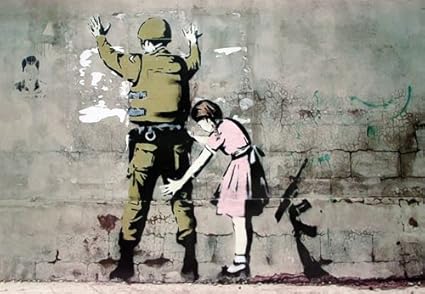
In a world where headlines are invariably saturated with reports of not only the causes but also the catastrophic repercussions of protests, one is forced to questions the means in which these pleas for change are performed - topically we can observe this as the social and economic turmoil unravels in places such as Hong Kong and Venezuela.  However, at times of seemingly inextricable discontent and anguish, a certain form seems capable to deliver messages in an amicable manner with the same gravitas: graffiti.

Image result for banksy soldier and girl

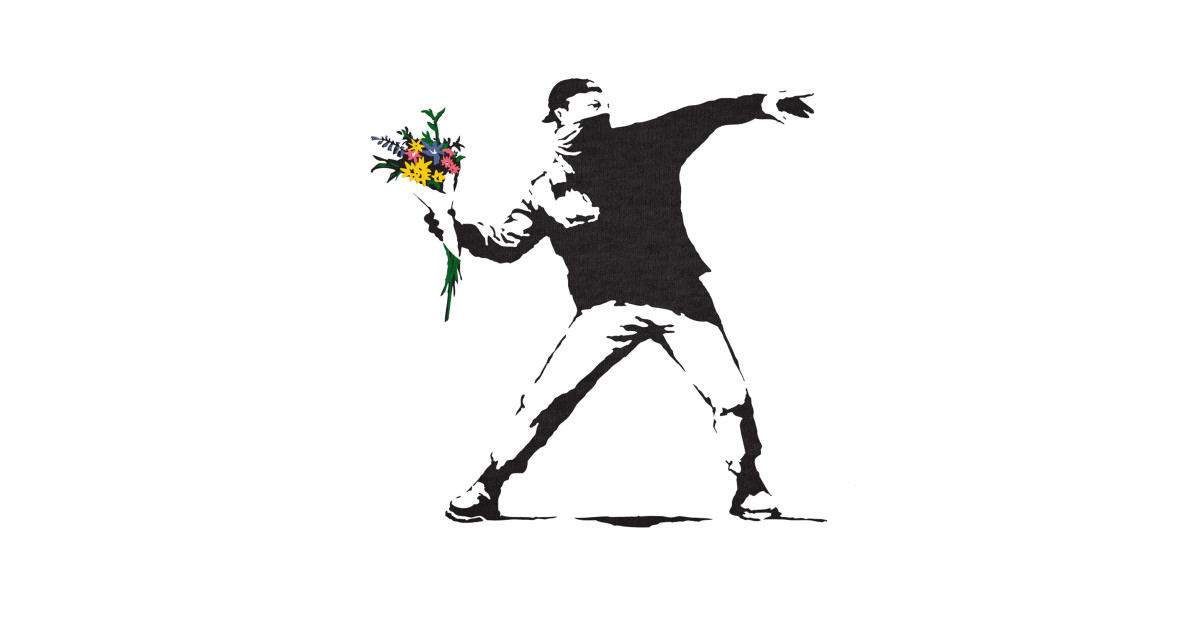
With the evolution of social media and its effects on global connection, it is undeniable that graffiti, a word usually referring to the illegal subset of street art, has found a significant footing in the contemporary era, not only as a valid art form but a political medium. Indeed, many artists, although frequently anonymous, are now some of the most influential figures of today. For many, Banksy is someone who immediately comes to mind, due to the nature in which the artist’s work epitomizes our vision of graffiti’s role in our society. For starters, by expressing his/her art incognito, the message becomes far more prevalent and relatable. Certainly, a remarkable advantage of graffiti is that everyone can identify a different meaning from the same artwork as it is not necessarily linked to a race, religion etc. (although of course some pieces are more targeted than others.)

Image result for banksy flower thrower

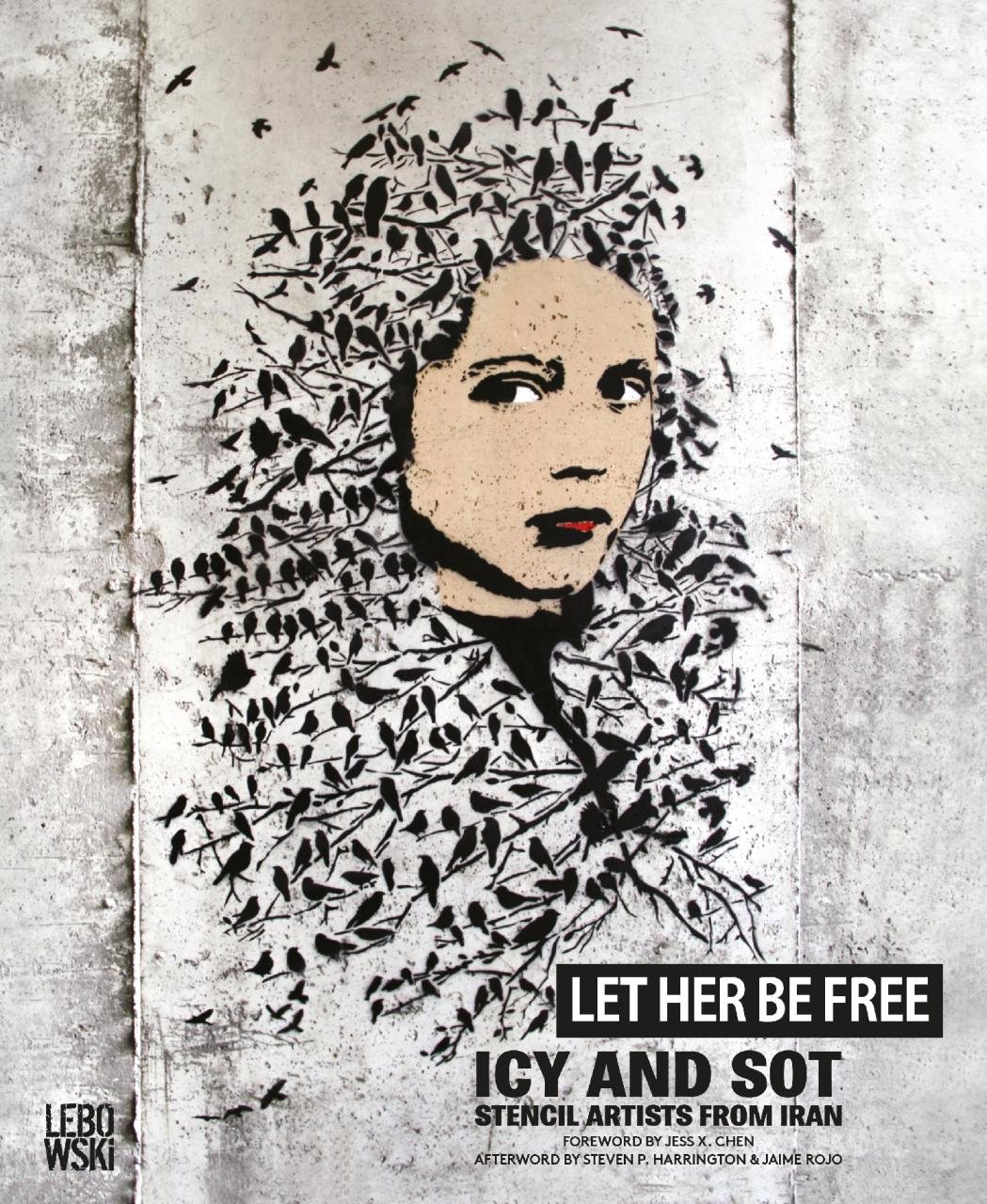
Image result for let her be free icy and sotOn a rather separate note, graffiti is able to ascertain such attention because of its appeal as a work of art, whether it be the ingenuity of the actual art, the message, or the intersection of the two. Banksy, amongst other notable artists, is someone who can make use of the latter. By cleverly playing with the protagonists or main themes in a piece, street artists are able to increase its ‘shareability’ or in other words the number or views. This in itself is a measure of how impactful a protest is and brings the blog back to the title.


Graffiti has the ability to reach a large audience. Although certainly not without its critics, this form of art has the power to give people, often with limited opportunities, a global platform to express themselves. Impactful, appealing and importantly peaceful, street art can deliver in ways that other protests cannot compare. Whether its lighting up the frequently dark streets of Rio or intriguing international viewers at art exhibitions in London, there is no question that graffiti will play a significant part in the protests of the future.


Works Cited:
Rashed, Waleed. “Egypt's Murals Are More Than Just Art, They Are a Form of Revolution.” Smithsonian.com, Smithsonian Institution, 1 May 2013, https://www.smithsonianmag.com/arts-culture/egypts-murals-are-more-than-just-art-they-are-a-form-of-revolution-36377865/.

Polinovsky, Ilona. “The Power of Banksy Street Art.” Urban Gateways, 21 Jan. 2016, https://urbangateways.org/the-power-of-banksy-street-art/.

Bullen, Pauline, et al. “Graffiti and Street Art Can Be Controversial, but Can Also Be a Medium for Voices of Social Change, Protest, or Expressions of Community Desire. What, How, and Where Are Examples of Graffiti as a Positive Force in Communities?” The Nature of Cities, 11 Sept. 2019, https://www.thenatureofcities.com/2016/03/23/graffiti-and-street-art-can-be-controversial-but-can-also-be-a-medium-for-voices-of-social-change-protest-or-expressions-of-community-desire-what-how-and-where-are-examples-of-graffiti-as-a-posi/.

Natalia Mesa - Neuroscience and Art


Art is both a dialogue and an investigation created in response to what happens in the world we live in. When it comes to modern conversations between fields of human inquiry, the interaction between Neuroscience and Art is of particular interest to me. At first glance the two seem incompatible. Neuroscience takes place in labs, with medical instruments and lots of computing power, following the scientific method and seeking to answer predetermined questions through data collection. Conversely, art takes place in studios with paintbrushes, pencils, and free-flowing creativity, following aesthetic rules (or no rules at all) in order to represent something or arouse an emotion. However, upon simply asking what the relationship between Art and Neuroscience is, one finds a myriad of answers coming from both fields. Neuroscientists consider art a valuable tool for research as well as a subject of research while artists consider neuroscientific advances tools and subjects for their art as well. The gap between these two fields is made smaller in virtue of the nature of Contemporary Art; “a dynamic combination of materials, methods, concepts, and subjects” (Art 21).

 
Neuroscientists like Sarah Schwettmann from MIT lead investigations with questions that ponder how our sensory perception of the world is connected to our creative tendencies. Her cross-disciplinary course offers the view that our brain’s interpretation of incoming sensory data is just as constructive and creative as the next step; creating art itself. Based on this view, neuroscience models of sensory perception turn into tools for creating art, exploiting the transitivity of the property of construction and creation our brain offers to create art. (MIT News) The first product of this cross-disciplinary class is an exhibition called Sensorium visible here: Sensorium The image to the right is titled "depth in waves" and is an inquiry on depth experience in color vision. 

An approach originating from the other side of the gap is that of Oscar Muñoz, a Colombian contemporary artist that reacts to Alzheimer’s and other concepts involved with memory and identity. He does not take directly from the tools and products of neuroscience in order to create his art, rather, he bases his works on neuroscience concepts such as forgetting one’s identity through Alzheimer’s, changing identity across time, and the psychological effects that war and trauma have on individuals and whole cities (Sicardi). Without technological advances that facilitate brain imaging and artistic photographing, along with more general field advances that have furthered our understanding of neurodegenerative diseases; Oscar’s contemporary art would perhaps lack the roots of inquiry that provide its deep foundation and would not attract as much attention from the academic realms.

A final example that demonstrates the presence of neuroscientific advances in art and vice versa is the exhibition Landscapes of the Mind: Contemporary Artists Contemplate the Brain.
In this exhibition ,set in Williams College Museum of Art, the four contemporary artists Susan Aldworth (British, b. 1955), Andrew Carnie (British, b. 1957), Jessica Rankin (Australian, b. 1971), and Katy Schimert (American, b. 1963) use a variety of mediums to represent and express their understanding of internal processes of the brain such as the differentiation and generation of neurons, consciousness of self, intuition and interpretation (WMCA).


Although brief, I hope this blogpost shows how closely related Art and Neuroscience can be and how they influence each other reciprocally, both motivating us to delve deeper into our inner world of the brain and external world of creative expression and perception. “Both artists and scientists strive to see the world in new ways, and to communicate that vision.”  (Forbes)

Sources: