Even though I am still a junior right now, I am already thinking about the senior distinction project/capstone course that I will most definitely pursue next year. I've been pretty restless over the past several days thinking about what exactly I am going to do for such a long and important project. I know already that I will do oil painting, but everything else, from specific technique to the subject matter/theme, is still unknown at this time. I thought about doing a series of satirical/parody pieces of famous paintings throughout history, but then again, I really wanted to be more orginial and unique. I thought about doing a series of self portraits, each individual piece representing a specific idea, but then again, this sounds a bit too cliche/boring - it seems like something that has been done to death. So as of right now, I have no idea what I am going to do for my distinction project. But fortunately, I dont have to worry about it for at least another semester and summer. For now, it would be wise for me to turn my attention towards the independence study I have with Bill next semester.
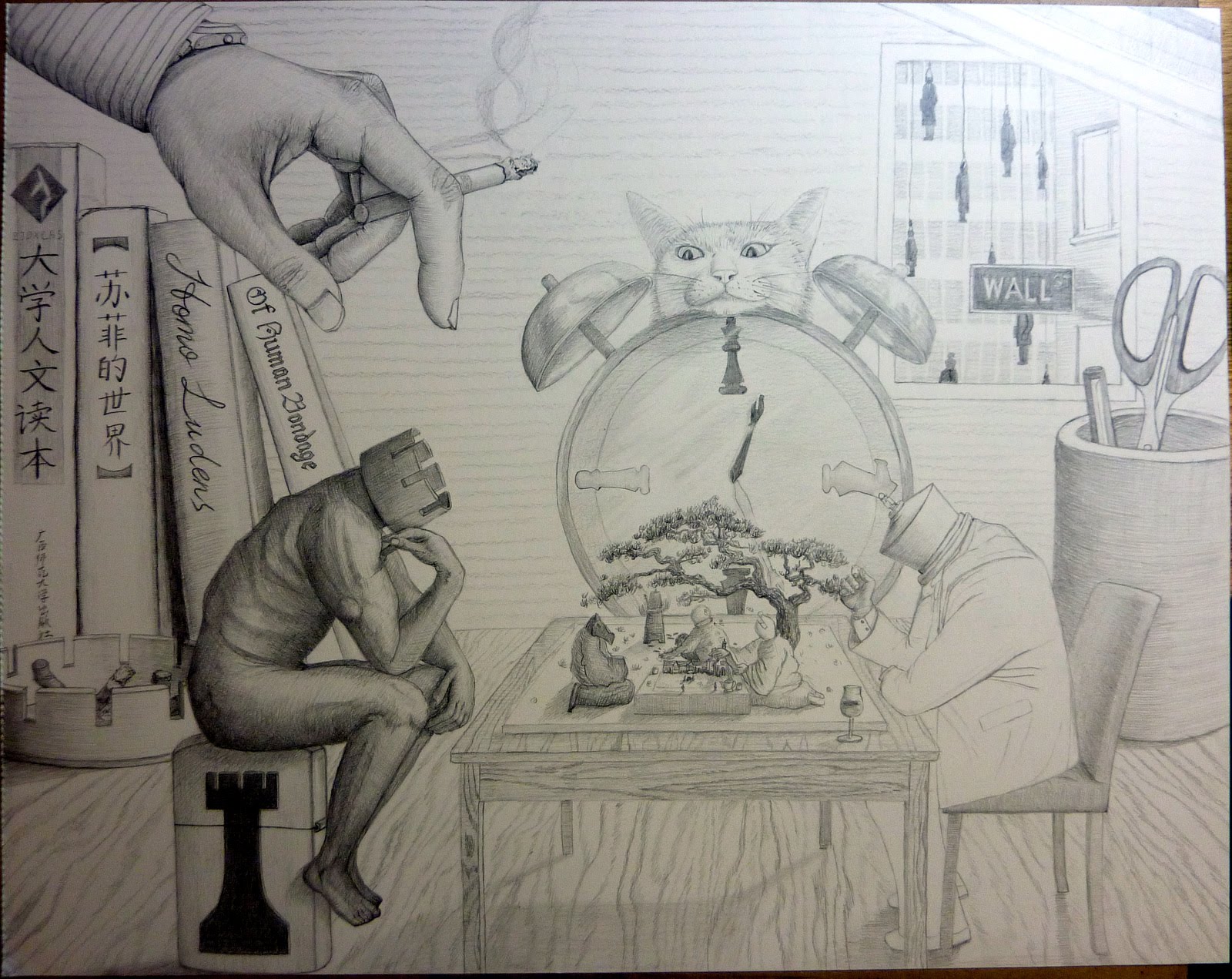
For my independent study, the current plan is to do a Rockwell-inspired colored pencil drawing. Colored pencil is my favorite medium, and I have a lot of experience/practice with this wonderful and demanding medium. Since my drawing is going to be quite large - 30x40 inches - it will be an extreme challenge for me to even FINISH the drawing to the level that I want to. But somehow, I am confident that I'll successfully see it through, even if it means spending, I don't know, several hundred hours on the drawing.
On a last note, my painting class just had the opening reception of our show last night. As you have probably noticed already, the entire second floor of Bay 12 of Smith is filled with paintings of all sizes, styles, themes, and techniques. All were created by our painting class taught by Pedro Lasch, a wonderful professor who really pushes you beyond your comfort zone and embrace new techniques/approaches. For any of you who are interested in art, be sure not to miss the painting class!